

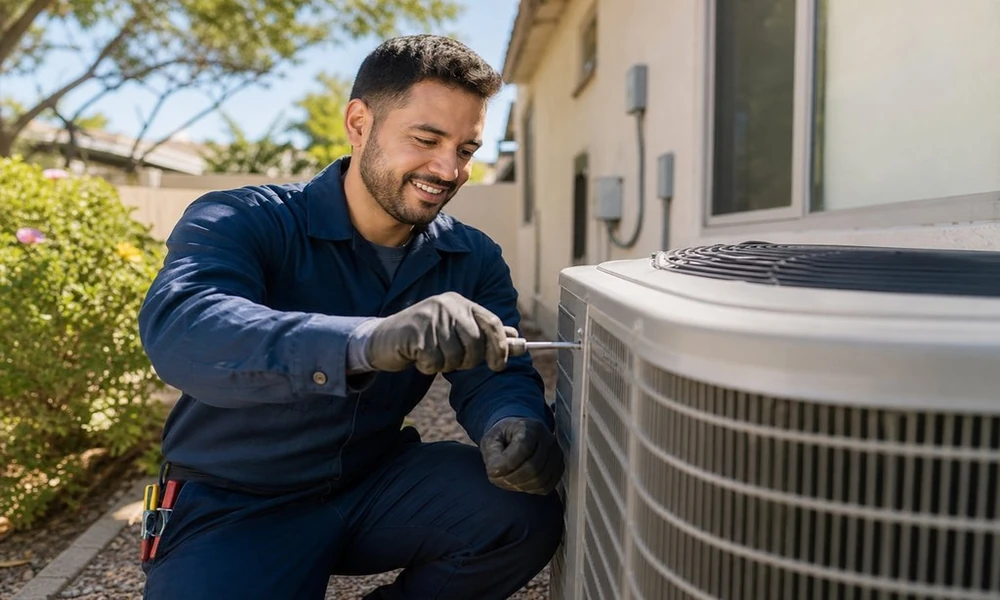
Residential air conditioning system
When your AC goes out the same day, the experience is quite different when temperatures are predicted to be above 100°F. Your home heats up very rapidly. Your pets will try to find any tile flooring they can to lay down on, and every room begins to feel a bit more claustrophobic. Homeowners in that situation don’t want to be told that someone will “be there soon.” They want to know exactly what to do once the first blast of hot air comes out of the vents and before your chosen AC repair company shows up at their home.
In fact, the best AC repair experience may be made during that timeframe. Good communication, a useful diagnostic procedure, and a technician that shows up equipped and ready to repair the system will make a bad afternoon into a good repair day.
Early Warning Signs
Many times, AC systems don’t go out completely without giving at least some notice. You might wake up in the morning, check your thermostat settings, and realize the air coming out of the vents isn’t as cold as it usually is. The AC might be running for long periods of time, but your home isn’t getting any colder.
There are other possible signs to watch out for:
- Less air coming out of a few or all of the vents in your home
- Clicking or humming noises coming from the outdoor unit
- Water pooling near the indoor AC unit
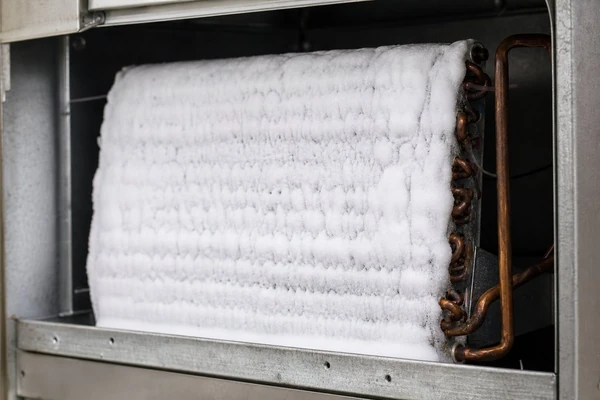
- Ice buildup on the refrigerant line or evaporator coil
- An electrical breaker that trips as soon as the system starts
Air conditioning components
One such example is when an evaporator coil freezes. The problem might seem relatively minor at first, but it can worsen in severity very quickly. Airflow decreases until almost none exists because of the ice buildup. If the system is left running while the coil is frozen, the unit could become more damaged as a result.
If you notice ice forming anywhere on the indoor AC unit, turn the cooling function off and set the fan setting to blow air if it is possible. This may help the ice melt faster while you wait for the AC repair technician to arrive. Don’t chip at the ice or pry any panels open.
Repair Calls
It’s likely that by noon, your home has grown quite a bit warmer. This is the point where you should place your repair call and give as much helpful information as possible. Let them know when the issue began, if the system is blowing out hot air, if your thermostat screen is blank, and if you saw any signs of ice, water, noise, or electrical odors.
An AC repair company that does good customer service will ask questions to narrow down the issue rather than telling you that someone could be there at some point during the day. They should also tell you what actions you can take in the meantime, especially when hot weather conditions put children, elderly people, pets, or anyone with a medical condition in danger.
It’s an unnecessary measure if you know your system is experiencing a problem because of a misplaced thermostat setting, a closed vent, or a dirty filter you recently discovered. However, if the system is running and not blowing cold air, or it won’t turn on at all, taking an educated guess may result in wasted hours compared to calling a professional immediately. Turn off blinds on windows facing the sun, don’t use your oven, and put portable fans in the rooms you’ll be occupying. These actions won’t replace air conditioning but they will keep your home from heating up as quickly.
System Diagnosis
When the technician comes, he shouldn’t just fix and leave. For example, if your unit has a bad capacitor and won’t start, that’s an easy fix but the technician should also look at the reasons the capacitor failed and make sure everything else is running fine.
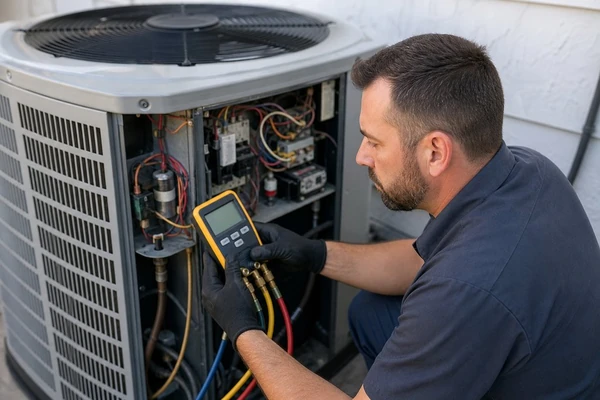
Air conditioner inspection equipment
If you have an older unit that’s having trouble keeping up in 100 degree weather, there could be several problems. Your capacitor might not be the only issue. It could be a dirty condenser coil, inadequate airflow inside, bad electrical connections or a refrigerant issue. The right repairs depend on the way the equipment is behaving.
A good diagnostic process may include testing:
- The thermostat function and wiring
- Airflow and filters inside
- Fan and compressor outside
- Capacitors and contactors
- Refrigerant levels and possible leaks
- Condensation drain inside
Good service involves explaining what’s wrong, what needs to be fixed immediately and what’s okay to wait on – the practical side of best air conditioning repair service starts there. If something doesn’t make sense, ask why. What prompted the suggested repair? Is it related to the problem at hand or something else that can wait until another time?
If a service technician recommends a replacement during an emergency visit, ask: How old is the system? How much is the repair cost? What is the expected lifespan? Is it safe to make a temporary repair? You can make a better decision when the risk of heat is less immediate.
Repair Follow-Through
Having cool air blowing from the vents is encouraging, but the tech should stay around for a while to ensure the system is working correctly. He should run it long enough to make sure the outdoor unit starts, that there’s good airflow, and the temperature is dropping.
A reliable air conditioner repair company is measured not just by same-day service but also by the quality of the work performed. A quick repair can leave you with a system that’s broken again by dinnertime.
Ask what was replaced, whether any maintenance issues were noted, and what red flags to look out for before calling again. If the evaporator coil froze, did he make sure there was adequate airflow or refrigerant rather than simply assuming thawing the coil was sufficient?
Heat-Wave Readiness
Once you’ve got the house cooled down, record the repairs and keep your receipt somewhere you can find it later. Change the filter, make sure you have clearance around your units and see if it seems like it’s still running normally that night.
Before the next heat wave hits, try turning your AC on earlier in the day and see how long it takes to cool the house.
